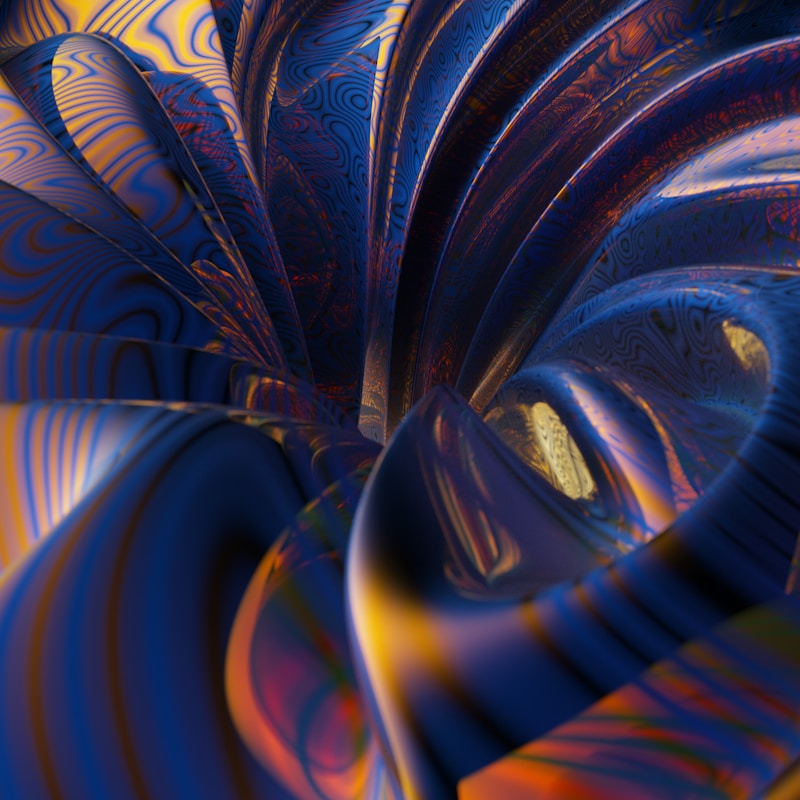
In September 2022, a piece called "Théâtre D'opéra Spatial" won first place in the digital art category at the Colorado State Fair. The artist, Jason Allen, had created it using Midjourney, an AI image generator. The backlash was immediate, furious and revealing.
"We're watching the death of artistry unfold before our eyes," one artist wrote on social media. Others argued that Allen had done nothing more than type words into a box and let a machine do the work. Allen countered that he had spent weeks refining prompts, curating outputs and editing the final image in Photoshop.
Three years later, the debate hasn't been resolved. If anything, it has deepened. And it touches something more fundamental than aesthetics or competition — it asks us to define what creativity actually is.
What the Machine Does
To understand the debate, you need to understand what AI image generators actually do. Models like Midjourney, DALL-E and Stable Diffusion are trained on billions of images scraped from the internet. They learn statistical patterns — the relationship between pixels, colors, shapes and the text descriptions associated with them. When you type a prompt, the model generates an image by predicting what pixels would be statistically consistent with your description.
This is not imagination. The model doesn't have ideas, intentions or feelings. It doesn't know what a sunset looks like — it knows what patterns of pixels correlate with the word "sunset" in its training data. The output can be beautiful, surprising, even moving. But the process that creates it is fundamentally different from human creativity.
The Case For
Proponents of AI art make several compelling arguments. First, every creative tool in history has faced resistance. Photography was dismissed as mechanical reproduction. Digital art was called "not real art." Even oil painting was once considered inferior to tempera. New tools always threaten existing hierarchies, and the resistance usually reveals more about the defenders than the tool.
Second, AI tools genuinely lower barriers. A person with a vivid imagination but no drawing skills can now visualize their ideas. A small business that can't afford a graphic designer can create professional-looking visuals. A game developer working alone can generate concept art in minutes instead of months.
Third, the most interesting work being done with AI treats it as a collaborative tool, not a replacement for human creativity. Artists use AI-generated images as starting points, reference material or components in larger works. The AI is a brush, not the painter.
The Case Against
Critics raise equally powerful objections. The most fundamental is about training data. AI models are trained on the work of millions of artists, most of whom never consented to having their work used this way and receive no compensation. When a model can generate an image "in the style of" a living artist, it's not just borrowing influence — it's commercially exploiting that artist's labor without permission.
Then there's the question of craft. Traditional art — whether digital or physical — requires skills that take years to develop. Line control, color mixing, compositional instinct, the ability to see what's wrong and fix it. These skills aren't just means to an end. They're part of the creative experience. When you remove the craft, you remove something essential about what it means to create.
There's also a market concern. If AI can produce "good enough" images instantly and nearly free, what happens to the illustrators, concept artists and graphic designers who currently earn a living from that work? The democratization argument rings hollow when it comes at the direct expense of working artists.
The Process Question
Perhaps the most interesting dimension of the debate is the one Bob Ross would have recognized immediately: the question of process.
Ross didn't value his paintings for their market worth. He valued the act of painting — the thirty minutes spent making deliberate marks, solving visual problems, experiencing the quiet satisfaction of a mountain appearing from nothing. The painting was evidence that the process had happened, but the process was the point.
AI art inverts this entirely. The output exists, but the human experience of creating it is fundamentally different. Typing a prompt and curating outputs is a creative act, but it's not the same kind of creative act as drawing, painting or composing. It engages different faculties. It requires different skills. And — crucially — it produces a different kind of satisfaction.
This doesn't make AI art invalid. But it does suggest that framing the debate as "is it art?" misses the point. The more useful question is: "What kind of creative experience does this enable, and what kind does it eliminate?"
Where This Goes
The technology isn't going away. AI image generation will continue to improve, become more accessible and integrate into existing creative workflows. The question isn't whether it will be used, but how.
The most likely outcome is stratification. AI-generated images will dominate low-stakes, high-volume contexts — social media content, stock imagery, rapid prototyping. Human-made art will retain its value in contexts where craft, intention and provenance matter — fine art, editorial illustration, brand identity, bespoke design.
The artists who will thrive are the ones who can do what machines cannot: bring genuine perspective, make intentional choices and create work that carries the unmistakable imprint of a human mind. In a world flooded with AI-generated images, the most valuable thing an artist can offer is something no model can produce: a point of view.